Water Damage Restoration Mount Laurel, NJ
24/7 water damage restoration in Mount Laurel, NJ. The restoration team pulls out standing water, dries the structure to the IICRC S500 standard and documents every step for your insurance claim.
(888) 471-9821Sump pit overflowing? Call dispatch now.
What every dry-out runs on
- 24/7 dispatch, holidays too
- IICRC S500 drying goals
- Truck-mounted extraction
- Moisture logs every day
Water Damage Restoration Services in Mount Laurel, NJ
Fifteen services shaped to the township's mix of 1970s subdivisions, townhome communities, older creekside houses and office space along Route 73.
 Emergency Water ExtractionTruck-mounted pumps and wands pull standing water out before it soaks into pad and subfloor.See how it gets dried
 Basement Flooding CleanupFinished lower levels pumped out, wet carpet and drywall cut back, slab and block dried.See how it gets dried
 Sump Pump Failure Water DamageA pit that overflows when the power drops in a storm, extracted and dried fast.See how it gets dried
 Crawl Space Water RemovalWater pumped off the vapor barrier, soaked insulation pulled and the joists dried.See how it gets dried
 Burst Pipe Water DamageSplit copper and PEX inside walls, every wet cavity opened up and dried to readings.See how it gets dried
 Frozen Pipe Water DamagePipes in garages and outside walls that crack in a January cold snap.See how it gets dried
 Storm and Creek Flood CleanupHeavy rain and creek overflow handled as contaminated water, removal first.See how it gets dried
 Roof Leak Water DamageWind-driven rain and snowmelt through shingles and flashing, attic and ceilings dried.See how it gets dried
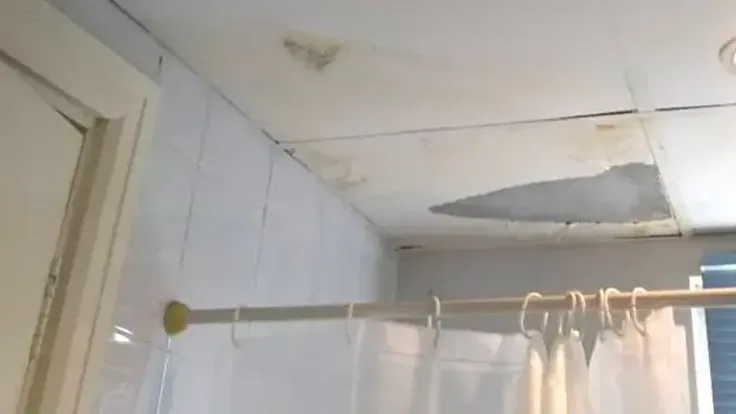
 Ceiling Leak Water DamageA bath or supply leak upstairs traced, the ceiling opened and the joist bays dried.See how it gets dried
 Water Heater Leak CleanupRusted tanks and failed fittings in basements, closets and garages.See how it gets dried
 Appliance Leak Water DamageWasher hoses, dishwashers and ice-maker tubes that leak slowly under floors.See how it gets dried
 Townhome and Condo Water DamageLeaks through a shared wall or ceiling, traced and dried in both units.See how it gets dried
 Sewage Backup CleanupFloor drain and toilet backups contained, removed and treated as Category 3.See how it gets dried
 Structural Drying and DehumidificationFraming, subfloor and hardwood dried to within 2 to 4 points of a dry reference.See how it gets dried
 Commercial Water DamageOffices, shops and warehouses dried in phases so work can keep going.See how it gets dried
What to do while the water is still moving
The first few minutes decide how much of the house dries in place instead of getting torn out.
- 1Close the main valve
In most homes here it sits in the basement, the utility room or the garage where the water pipe comes in.
- 2Cut power to wet rooms
Switch those breakers off if the panel is dry. If reaching it means standing in water, leave it alone.
- 3Keep clear of the water
Stay out of standing water near outlets, cords and any floor drain that is backing up.
- 4Photograph before moving
Shoot the waterline, the source and damaged belongings before anything is lifted or thrown out.
- 5Lift, then call
Get rugs and valuables off the floor, then call. Mold can start growing within 24 to 48 hours.
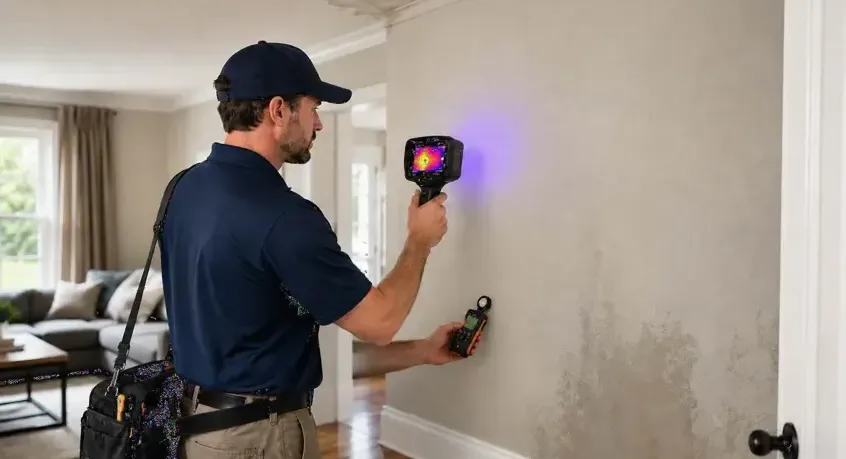
Four things every township dry-out gets
Rapid local response
Dispatch runs 24/7 across the township and the towns around it, because water keeps creeping into subfloor, drywall and block walls overnight.
IICRC S500 drying standard
The drying team works to IICRC S500: structural drying of framing, subfloor and walls, not just the carpet that shows.
Claim-ready documentation
A moisture map, daily psychrometric readings and timestamped photos from before any demolition go into the insurance file.
South Jersey water know-how
Sump pits that quit in outages, pipes in cold garages and leaks through shared townhome walls are routine work here.
Water damage dried to the IICRC S500 standard
IICRC S500 is the industry drying standard. It treats a water loss as a problem in the structure, so the order of the work matters as much as the equipment.
- 1
Map
Thermal cameras and pinless meters find every wet wall and floor before a single fan goes down.
- 2
Extract
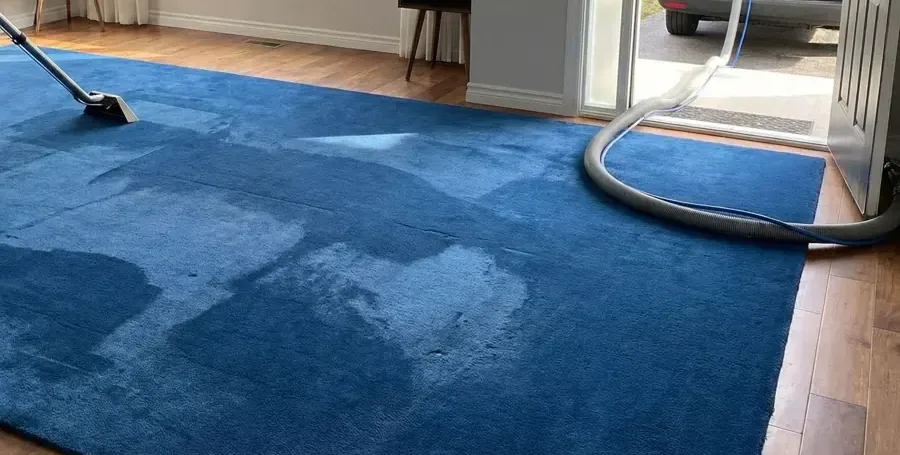
Truck-mounted extraction carries the water outside instead of pushing it into the next room.
- 3
Set the drying
Air movers sized to each room's evaporation load, LGR dehumidifiers, and desiccants for block and hardwood.
- 4
Read daily
Readings get logged every day, and equipment shifts toward whatever is still wet.
- 5
Verify
The job ends when materials read within 2 to 4 points of a dry reference, with logs for the claim.
- Truck-mounted units pull out large volumes of water and discharge it outside the house.
- Air movers are angled to draw moisture out of wall cavities and subfloor.
- Thermal cameras and moisture meters find water behind drywall and under flooring.
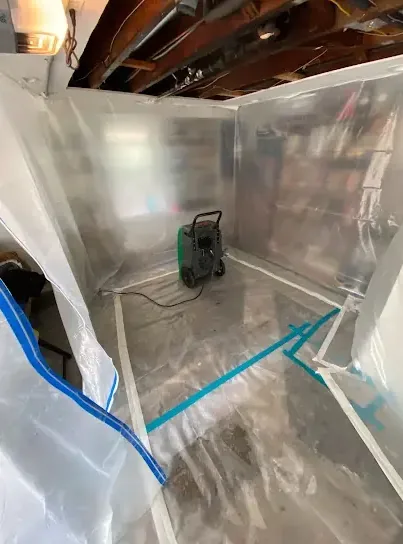
- Containment, HEPA air scrubbers and EPA-registered antimicrobial come out on contaminated losses.
What does water damage restoration cost in Mount Laurel, NJ?
Most water damage restoration in the township runs $1,200 to $6,500 for a contained clean-water loss and $6,500 to $25,000 or more when a finished basement, creek water or sewage is involved.
Contained clean-water leak
$1,200 to $6,500- One or two rooms
- Extraction and in-place drying
- 3 to 5 days of equipment
Finished basement or several rooms
$6,500 to $15,000- Carpet, pad and lower drywall removed
- Block walls and slab dried
- Moisture mapping and daily logs
Sewage, creek water or a whole level
$15,000 to $25,000+- Category 3 containment
- Porous materials removed
- Antimicrobial and full drying
The number moves with the water category, the square footage, the material class and how fast drying started. For a planning figure, run the water damage cost calculator.
Documentation for your insurance claim
A water claim is decided on paper. The mitigation team keeps that paper current while the equipment runs, so the file shows exactly what got wet and what was done about it.
Check your own policy
Sudden and accidental water, like a burst supply pipe or a split water heater, is often covered after the deductible. Sewer and sump backup usually needs its own endorsement, and rising creek or storm water falls under flood insurance.
Coverage depends on your policy, so it is worth checking with your own insurer. Ask the restoration contractor who responds what documentation comes with the job.
- A moisture map of each wet room, wall and floor from the first visit
- Daily psychrometric readings and drying logs
- Timestamped photos taken before anything is cut out
- The category and class of the loss
- A line-item scope in the format adjusters expect
All water damage categories covered in Mount Laurel, NJ
Category 1, clean water
A supply pipe, a water heater or an ice-maker tube. Caught early, much of it dries in place.
Burst pipe water damageCategory 2, gray water
A washer, a dishwasher, an AC drain pan, or clean water left sitting too long.
Appliance leak cleanupCategory 3, black water
Sewage, floor drain backups and creek or storm water. Contained, removed and treated.
Sewage backup cleanupWhat a water damage dry-out looks like in Mount Laurel
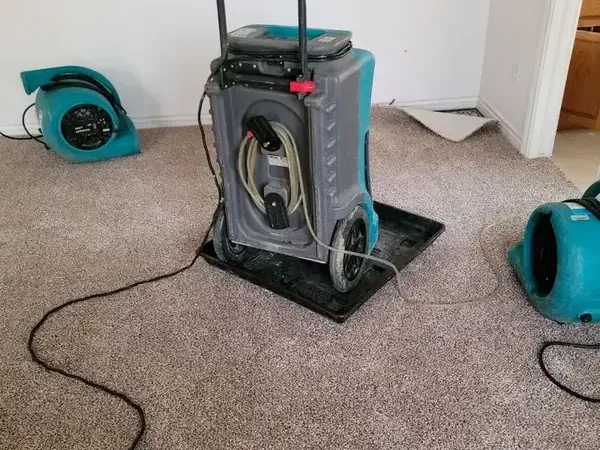
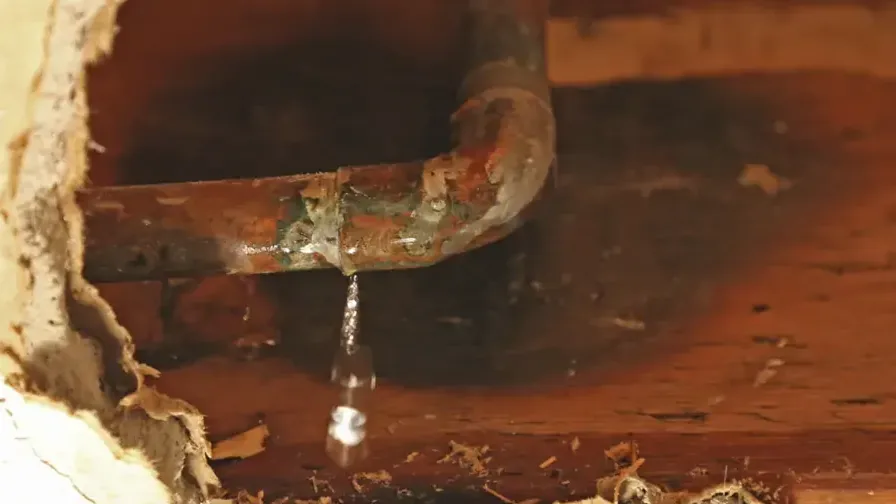
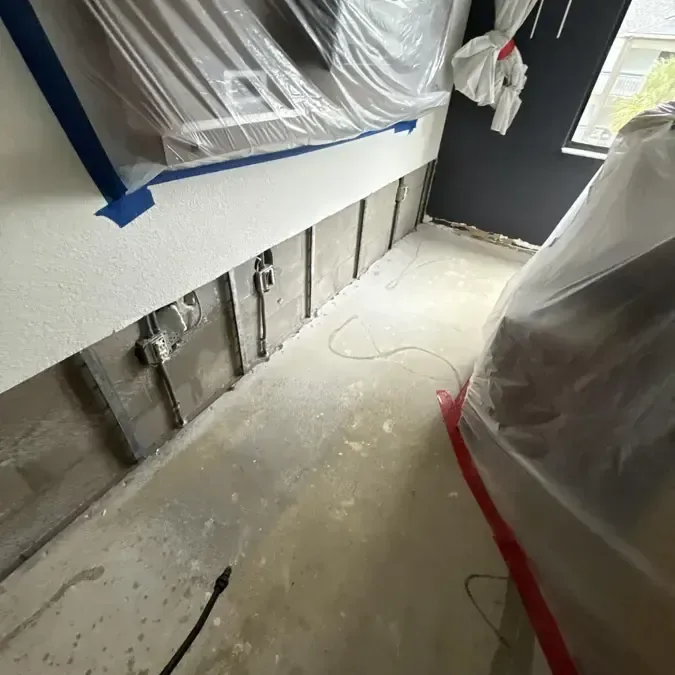
Representative photos of containment, extraction and drying gear at work.
Sections and towns covered around Mount Laurel, NJ
The response team covers every section of ZIP 08054 and the towns on the township's edges, 24/7.
ZIP code covered
Neighborhoods and sections
ZIP 08054
- Ramblewood
- Rancocas Woods
- Birchfield
- Pine Grove
- Heulings Hill
- Country Side section
Corridors and crossroads
ZIP 08054
- Route 73 corridor
- Route 38 corridor
- Union Mill Road
- Hartford Road
- Fellowship
- Centerton
- Masonville
Towns around the township
Nearby
- Moorestown
- Maple Shade
- Cherry Hill
- Evesham Township
- Hainesport
- Lumberton
- Palmyra
- Collingswood
One call reaches Mount Laurel water damage pros, 24/7
From Rancocas Woods and Ramblewood to Birchfield, Fellowship and the office parks off Route 73, one call starts the response anywhere in the township.
Have the cross street ready and say which level is wet and where the water came from. That decides what goes on the truck: extraction gear, extra dehumidifiers for a basement, or Category 3 containment.
Why Mount Laurel homes take on water
The township was farmland until suburban growth from Philadelphia arrived in the late 1960s, so most homes date from then to about 1990. That housing, the creeks and South Jersey winters set the pattern.
- Aging plumbing. Most supply pipe, drain pipes and water heater connections went in between the late 1960s and 1990, and fittings that old fail without warning.
- Sump pumps and power cuts. The county hazard plan names Ramblewood and the Country Side section for battery backup sump pumps, since a storm outage stops the pump.
- Creek flooding. Parkers Creek has closed Union Mill Road, and the township has studied flooding there and on Hartford Road toward Route 38.
- Cold snaps. January averages near freezing, and a run of nights in the teens splits pipes in garages, crawl spaces and outside walls.
- Shared walls. In townhome and condo communities, a washer hose or water heater in one unit often reaches the neighbor next door or below.
June 23, 2015: a severe storm, later part of a federal disaster declaration, caused about $1 million in property damage in the township, according to the county hazard plan.
Water damage questions from Mount Laurel homeowners
How fast does someone respond to water damage here?
Dispatch runs 24/7, weekends and holidays included, and active water is treated as urgent at any hour. The first call matters more than the first repair, because water keeps moving into walls, subfloor and lower levels.
Is water damage covered by homeowners insurance in New Jersey?
Sudden water such as a burst pipe or a failed water heater is often covered after the deductible. Sewer or sump backup usually needs an endorsement, and rising creek or storm water needs a flood policy. Coverage depends on your policy, so check with your own insurer.
What causes most water damage around the township?
Aging supply pipe and water heaters in homes built from the late 1960s on, sump pumps that stop when the power fails, frozen pipes in January, and heavy rain near Parkers Creek and the Rancocas side.
What should I do if my sump pump stops during a storm?
Keep people away from the water if outlets or cords are near it, move belongings off the floor and call. The extraction crew pulls the water out and the drying team dries the slab and lower walls. See sump pump failure water damage.
How long does it take to dry a house after water damage?
A contained Class 1 or 2 loss usually dries in three to five days. Block basement walls, hardwood and plaster take longer, and equipment stays until the readings reach the drying goal. The drying time estimator gives a rough number.
What is IICRC S500?
IICRC S500 is the industry standard for water damage restoration: how a loss is classified, how drying is planned and monitored, and how dry is confirmed with readings.
What is the difference between mitigation and repair?
Mitigation stops the damage: extraction, removal of what cannot be saved and drying. Repair rebuilds drywall, flooring and paint afterward, once the structure reads dry.
When does drywall have to come out?
When it sags, when it held water for days, or when Category 2 or 3 water touched it. Clean water caught early can often be dried with the wall left standing.
Why is sewage handled differently?
Sewage is Category 3 from the moment it happens. Porous materials it touched are removed rather than dried, and hard surfaces get an EPA-registered antimicrobial.
Who handles a leak that started in the condo next door?
The restoration team traces the source and dries both units, while the association and each owner's insurer sort out who pays. Photos and readings from both sides help that conversation. See townhome and condo water damage.
Wet floor or a flooded basement in Mount Laurel? Call now.
Extraction, structural drying and a claim-ready file, 24/7, from Rancocas Woods to Ramblewood.